Fresh Rhubarb and Ginger Scones With Stem Ginger

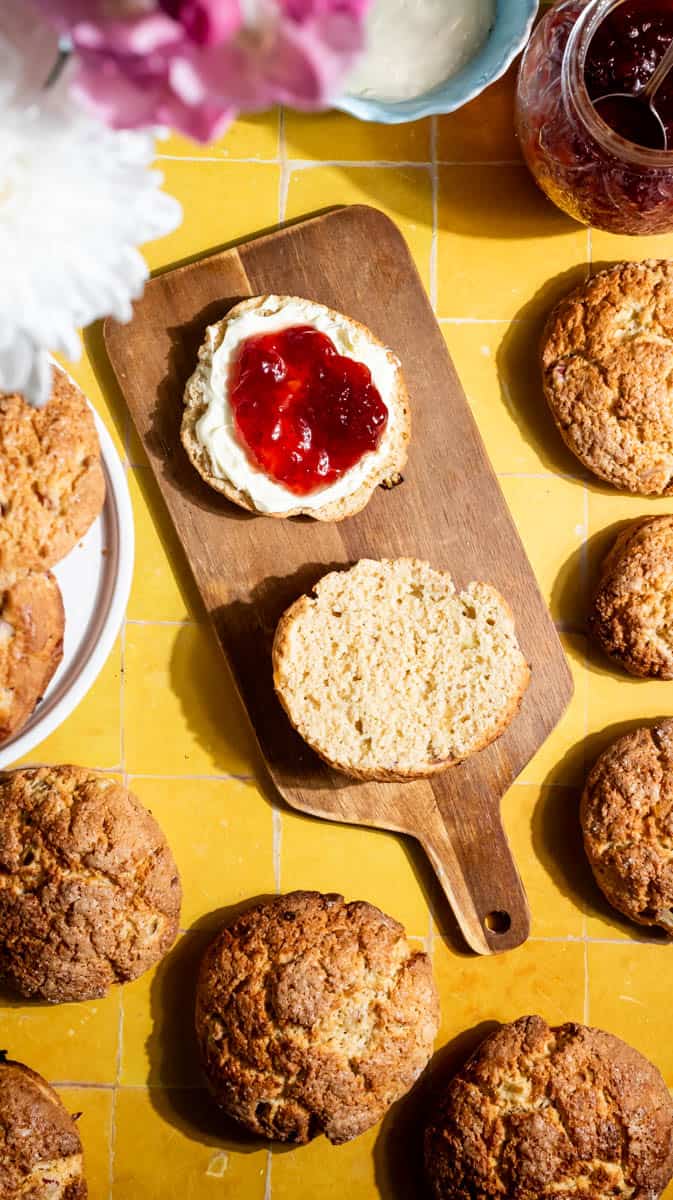
When it’s Rhubarb season, these light and fluffy scones make the perfect treat. Combined with Stem ginger, you can have delicious Rhubarb and Ginger scones as a snack or served up for an afternoon cream tea.
Recipe Overview
Skill Level:
BEGINNER
Prep Time:
25 MINUTES
Cook Time:
25 MINUTES

What Makes This Recipe Great
Leftover scones are fine to freeze and enjoy later on, so you can make a big batch of scones and store them for later.
These fruit scones are easy to make and great for beginner bakers. No fancy equipment or special skills needed.
A traditional British Afternoon Tea experience. Serve them up with homemade jam, clotted cream and a pot of tea, and create a recipe straight from a posh tea room that you can enjoy in the comfort of your own home or garden.
Check Out More Scone Recipes:
Equipment Needed:
- Measuring Scales and Measuring Spoons – It is always better with baking recipes, to accurately measure all the ingredients. You’ll end up with less mistakes and better results this way.
- Baking Tray/Baking Sheet – Lined with baking paper/parchment paper. Have one large enough to fit all the scones on, or use 2.
- Large Mixing Bowl – A large bowl to the scone dough inside. Have a wooden spoon or spatula to hand too. Alternatively, you can create the dough with a stand mixer that has a paddle attachment (for the first part) and dough attachment (to finish the dough mixing). You can also use a food processor to mix the butter and flour.
- Whisk – For beating the eggs with the milk and vanilla. Use a small bowl for this too.
- Sharp Knife and Chopping Board – For dicing and chopping the rhubarb and stem ginger.
- 8cm (3 inch) Round Cookie Cutter – I use this to make uniform sized scones. If you don’t have one you can create a disc from the dough and slice it like a pizza, making triangle-shaped scones or ball up the dough into portions, flattening each one slightly.
- Wire Cooling Rack – It’s best to allow the scones to cool on a wire rack so they don’t get soggy bottoms as they cool.
Ingredients
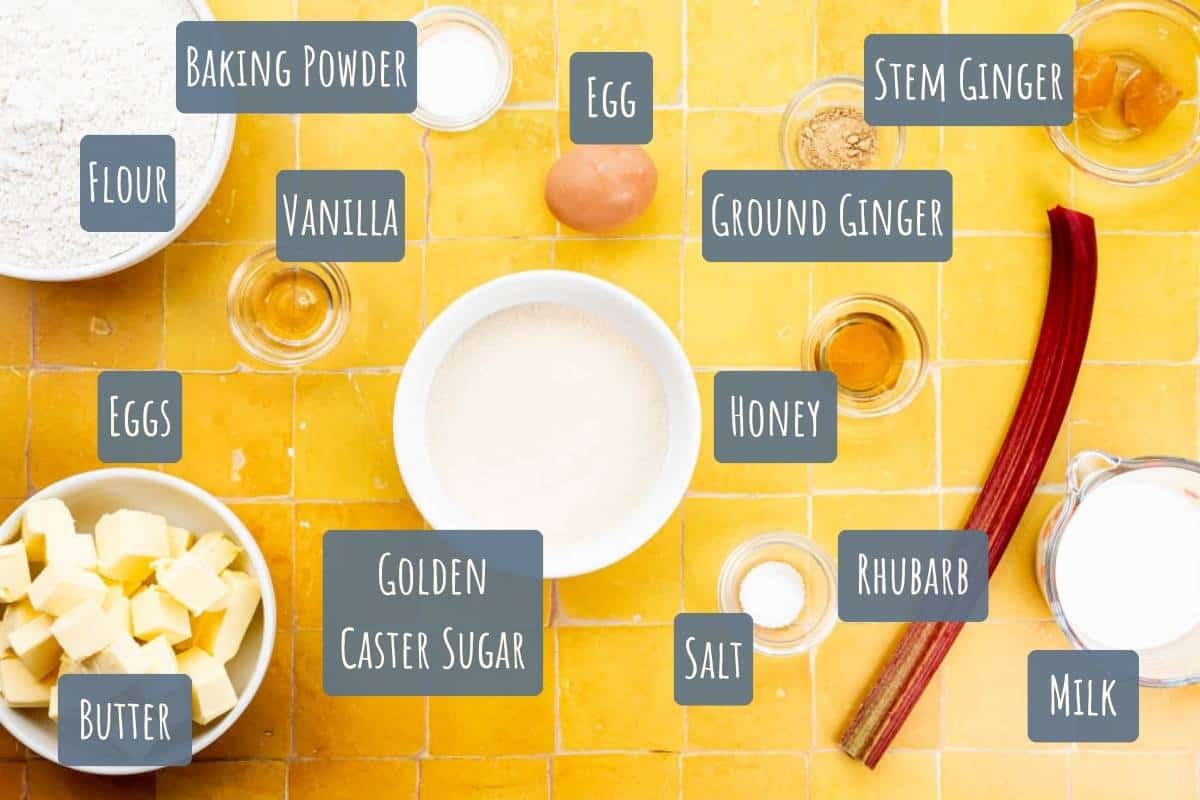
- Plain Flour – Use a plain white flour (all-purpose flour) for this recipe. A bread flour is unsuitable as it will make the scones too dense.
- Baking Powder – Make sure it’s fresh (before the expiration date and within 6 months of opening) for the best results. Old Baking powder won’t give as good a rise.
- Ground Ginger – This adds a warming a spicy element straight into the scone dough. Ginger pairs very well with the flavour of rhubarb.
- Salt – This enhances the flavour of the scones.
- Golden Caster Sugar – Gives the scones sweetness and adds a golden hue to the dough.
- Unsalted Butter – We add in salt separately so that it is easy to control the amount we use. I don’t recommend using salted butter here. Make sure the butter is chilled. On hot days, I would recommend chopping the butter into small chunks ready to use, then returning it to the fridge While you prepare everything else.
- Egg – A large fresh egg binds the dough together and helps to create the texture.
- Vanilla Extract – Used to flavour the scones and compliment the other flavours.
- Whole Milk – Just like the butter, make sure the milk is cold and chilled until use.
- Honey – A add a touch of extra sweetness for the scones.
- Fresh Rhubarb – Use only the red/pink parts of the rhubarb stems as the green part can be too sour. You can use rhubarb that has been frozen if it’s out of season when you make these. Dice the rhubarb into very small pieces for best results.
- Stem Ginger – Drain well before use and chop finely so that the flavour is evenly spread.
Substitutions and Additions:
Wondering if you can substitute or add an ingredient? Here, I will tell you if that’s possible.
Substitutions:
- Plain Flour – We add in our leavening agent in separately so, if you wanted to use self rising flour, do not add the baking powder. Be aware, that you may get different results with this substitution however.
- Golden Caster Sugar – You can use white caster sugar instead of golden caster sugar. The colour of the scones after baking may not be as golden throughout the scone.
- Whole Milk – You can use semi-skimmed milk but they scones won’t be as rich. Alternatively, you can use buttermilk for a tangier flavour.
Additions:
- Spices: You can add a pinch of ground cinnamon to the scone dough for extra flavour.
- Chocolate: You can add chopped dark chocolate or white chocolate chips to the dough.
- Nuts: Adding some chopped nuts like almonds, pecans, or walnuts will give the scones a nice crunch.
- Glaze: For a glossy finish, you can brush the tops of the scones with a simple glaze made of icing sugar and milk and a pastry brush after they come out of the oven.

Step-By-Step Guide – How To Make Rhubarb Scones With Ginger




Frequently Asked Question
This could be from overmixing, using butter that is too warm or using old or expired baking powder.
Overbaking is usually a reason for dry scones as is overmixing. Be careful to only mix the dough until everything is just combined.
It’s important to leave space between the scones on the baking sheet so that they have room to rise. If the scones are too close together, they will steam each other and won’t rise properly. They might also bake together into one giant scone!
Mastering This Recipe – Expert Tips
- Chill the butter: Cold butter is essential for flaky scones. Cubed and chilled butter creates steam pockets in the scone dough as it bakes, leading to a light and airy texture.
- Don’t overmix: Scones are a tender dough. Mix the wet and dry ingredients just until combined. Overmixing activates the gluten, resulting in tough scones. A gentle fold is sufficient.
- Leave the Oven Door Alone: Opening the oven door lets out heat and can affect the rise of your rhubarb ginger scones. Resist the urge and let them bake undisturbed for the recommended time.

Storage
Storage:
- Room Temperature: Freshly baked rhubarb and ginger scones can be stored at room temperature in an airtight container for up to 2 days. They will be freshest the day they are baked, but will still be enjoyable for a day or two after.
Reheating:
- Oven: For a quick refresh and to bring back that warm, fluffy texture, preheat your oven to 175°C (350°F). Wrap the scones loosely in foil and reheat for 5-10 minutes, or until warmed through.
- Microwave: While not ideal, scones can be reheated in the microwave in a pinch. However, this method can dry them out. Wrap individual scones in a paper towel and microwave on high for 10-15 seconds, or until warmed through. Be careful not to overheat, as they can become tough.
Freezing:
- Scones freeze beautifully and are a great way to enjoy them for longer. Once the scones are completely cool, wrap them tightly in clingfilm/plastic wrap or place them in a single layer in a freezer-safe container. They will keep in the freezer for up to 3 months.
Defrosting:
- To defrost frozen scones, simply transfer them from the freezer to the fridge overnight. Alternatively, you can thaw them at room temperature for a few hours. Reheat as desired using the methods mentioned above.
Important Note: While these scones can be reheated and frozen, their texture will not be exactly the same as freshly baked scones. They may lose some of their crispness on the outside and become slightly softer overall.

Fresh Rhubarb and Ginger Scones With Stem Ginger
Ingredients
- 450 g Plain Flour
- 3 tsp Baking Powder
- 1 tsp Ground Ginger
- 0.5 tsp Salt
- 100 g Golden Caster Sugar, plus extra for sprinkling
- 150 g Unsalted Butter, Chilled
- 1 Large Egg
- 1 tsp Vanilla Extract
- 130 ml Whole Milk, plus extra for brushing
- 1 tsp Honey
- 80 g Fresh Rhubarb
- 30 g Stem Ginger
Instructions
- Preheat your oven to 190°C (375°F).
- In a large mixing bowl, combine plain flour, baking powder, ground ginger and salt.
- Cut the unsalted butter into small cubes and add it to the flour mixture. Use your fingers to rub the ingredients together until they resemble breadcrumbs.
- Mix the caster sugar through the flour mixture.
- In a separate bowl, whisk together the large egg, vanilla extract, honey and whole milk.
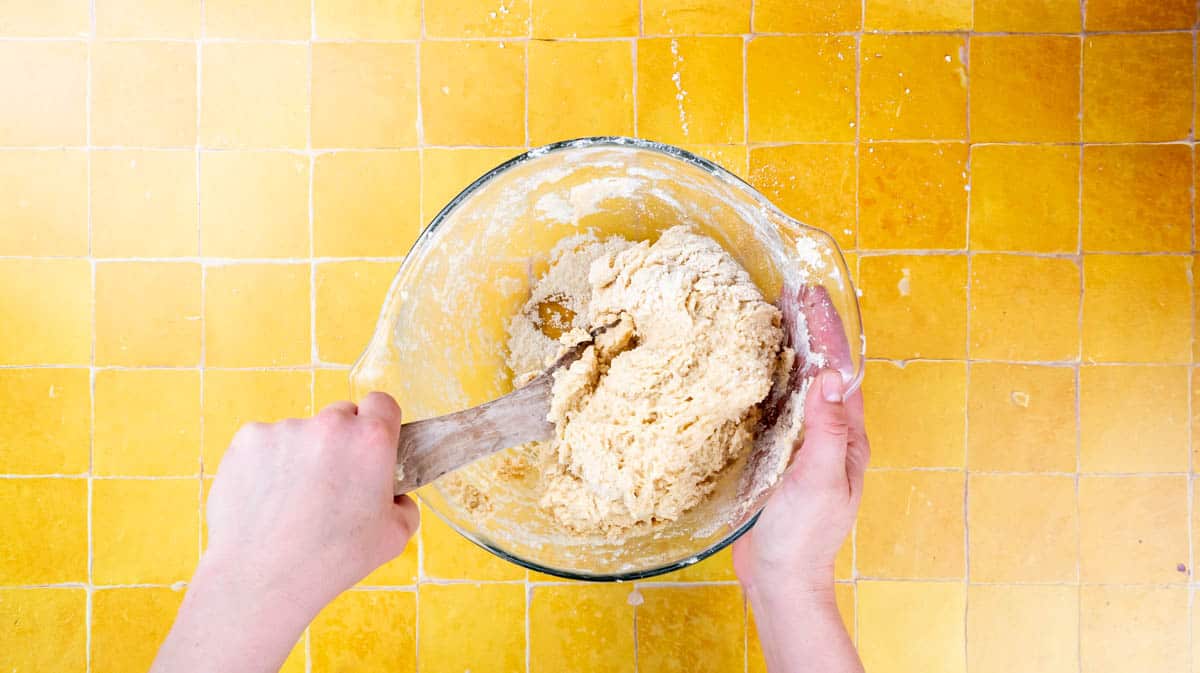
- Add the egg mixture to the flour mixture and gently fold until just combined. Be careful not to overmix.
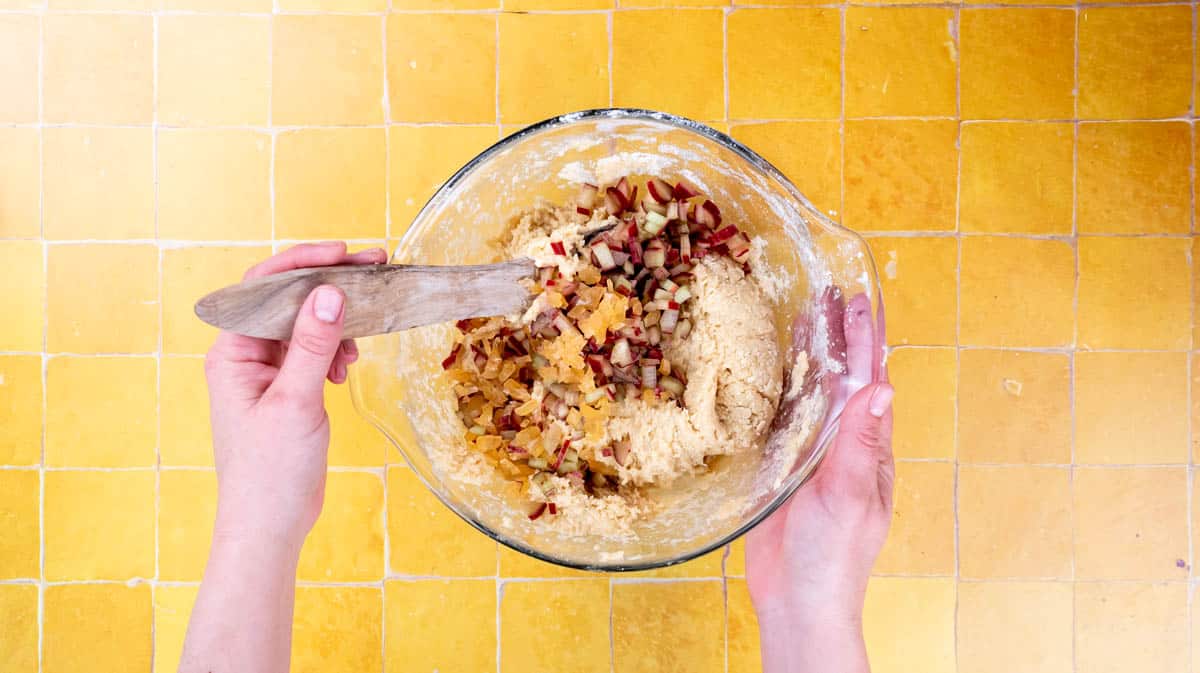
- Dice the fresh rhubarb and stem ginger into small pieces. Mix them into the scone dough gently.
- Transfer the dough onto a lightly-floured surface. Use floured hands to press it down until it's about 2-3cm thick (approximately 1 inch).
- Use an 8cm (3 inch) round cookie cutter to cut out 8-10 scones. If needed, you can gather up the excess dough and press it down again, but try not to do this too many times.
- Arrange the scone circles on a large, lined baking tray, leaving space between each one to allow them to rise when baking, without touching.
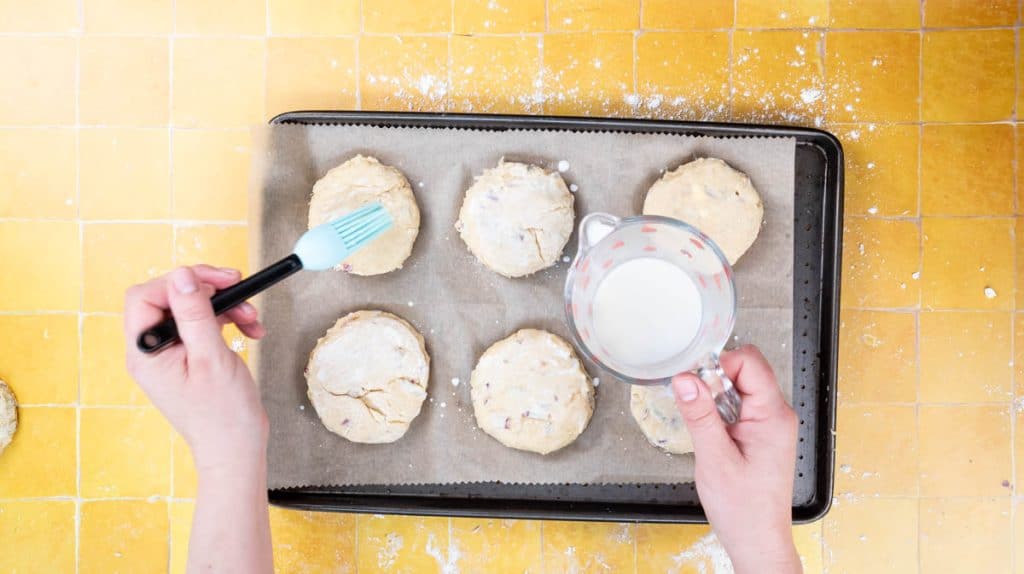
- Using a pastry brush, brush each scone top with a little milk to help them to brown in the oven.
- Sprinkle some extra golden caster sugar on top of each scone for a sweet finish.
- Bake in the preheated oven for 25 minutes, or until the scones have risen and turned a lovely golden brown.
- Once baked, transfer the scones to a wire cooling rack and allow them to cool slightly before serving. They're best enjoyed warm!
Recipe Notes
- Chill Butter: Cold, cubed butter creates steam pockets for flaky scones. Keep it chilled before using.
- Avoid Overmixing: Mix wet and dry ingredients just until combined to prevent tough scones. A gentle fold is all you need.
- Maintain Oven Temperature: Avoid opening the oven door while baking to ensure proper rise. Let scones bake undisturbed for best results.


