Homemade Traditional Scotch Egg Recipe – With Stuffing

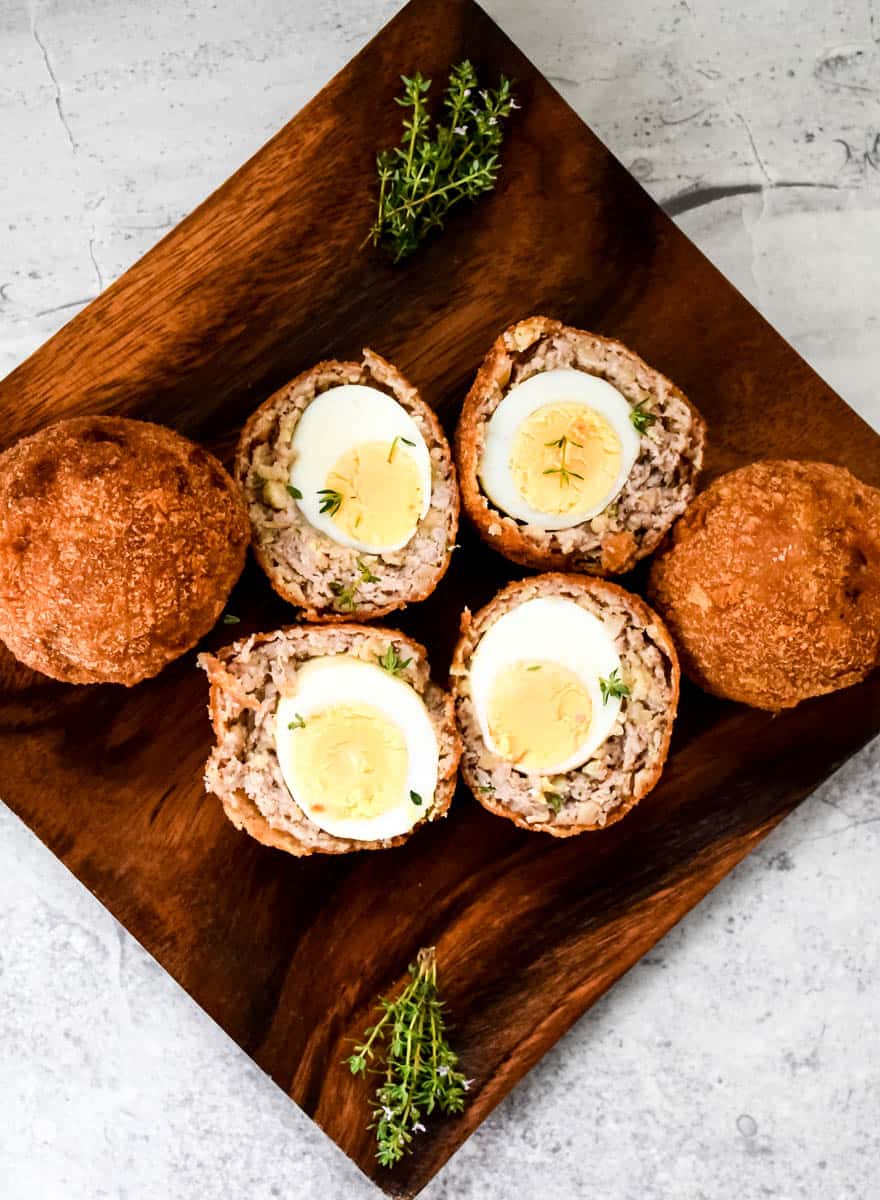
Traditional Scotch Eggs made at home are great for parties, picnics and lunchboxes. Once you have tried homemade Scotch Eggs with sausage meat and sage and onion stuffing, you’ll never go back to shop-bought again!
Recipe Overview
Skill Level:
Intermediate
Prep Time:
30 MINUTES
Cook Time:
20 MINUTES

What Makes This Recipe Great
A traditional British recipe with simple ingredients but packed with flavour.
A great alternative to sandwiches for packed lunch, they can be eaten hot or cold.
Surprisingly easy to make and can be stored for 4 days.
So, what is a Scotch Egg? If you’re not from Britain, this recipe might be something quite new to you. To put it simply, a Scotch egg is a hard-boiled egg, coated in seasoned sausage meat and finished with a crispy outer breadcrumb coating. It is then deep fried before serving hot or cold. It might seem a little strange, but trust me, it tastes delicious, especially when you make your own Scotch eggs at home. You might be surprised to learn that this also isn’t a Scottish Egg as you might think by the name, this snack actually derived in England and the name itself is ambiguous in its origin.
Once you have made your own traditional Scotch eggs you will never look back. They really are so much better than the ones you buy ready made. In fact, they taste completely different and a great result from these is something that is easily achievable. Even when you aren’t hugely comfortable in the kitchen.
We combine a mixture of good-quality sausage meat with sage and onion stuffing to coat the eggs before breading them. This gives our Scotch egg recipe a little twist and heightens the overall flavour. We use a ready-made mixture of stuffing for ease, but feel free to create your own for this recipe. You can even try different stuffing mixture to vary the taste.
Making your own scotch eggs is also a great idea when you are wondering what to do with a lot of eggs. Perhaps you keep chickens? or have simply over bought.
How to Coat Scotch Eggs in Breadcrumbs Without Making a Mess
Now, preparing your savoury eggs can get messy! I don’t mind a messy recipe when the results are so fab. But, if you want to avoid getting too sticky, make sure you coat your hands in flour before coating the egg in the sausage meat. Place your coating ingredients, flour, egg and breadcrumbs into 3 separate shallow bowls in a row. Start by coating each egg in the flour and then try and work one handed when coating them in breadcrumbs, use one hand for the egg and the other hand for the bread. That way you don’t end up accidently covering yourself in a breadcrumb coating rather than your eggs!
Check Out More British Snack Recipes:
Equipment Needed:
- Large Saucepan: You need a saucepan big enough to fit all the eggs.
- Slotted spoon: For carefully removing eggs from boiling water and the oil after frying.
- Large Mixing Bowl: A large bowl to combine the sausage meat and stuffing mix.
- 3 Shallow Bowls For Breading: Shallow bowls make it easier when coating the Scotch eggs with the ingredients for breading.
- Ice Bath or Cold Water Bowl: To cool the boiled eggs for easy peeling.
- Deep Frying pan or Deep Fryer: For frying the Scotch eggs.
- Tongs: For handling the eggs while frying.
- Food Thermometer (optional): To ensure the oil reaches the correct frying temperature (160°C/320°F).
- Wire Cooling Rack/Kitchen paper: For draining excess oil from the fried Scotch eggs.
Ingredients:
- Eggs: We are using large free-range eggs for this recipe. Fresh eggs are best. You can choose golden-yolk eggs for a rich flavour and deeper colour.
- Sausage meat: A good quality sausage meat works best. If you cannot find sausage meat in the supermarket, remove the casing from good quality sausages and use the meat from those.
- Sage, onion, and Apple Stuffing Mix: We are using a ready-mixed dried stuffing. You can use fresh stuffing or make your own at home.
- Fresh thyme: Chopped and mixed into the sausage meat for an extra layer of herbal flavour. You can use dried thyme too, just use less as dried herbs are more concentrated in flavour.
- Sea Salt and Black Pepper: Season the sausage mixture to taste, but pay attention to the meat you buy as it may already be seasoned. Adjust your own seasoning accordingly.
- Plain flour: Used to coat the sausage-covered eggs, helping the beaten eggs and breadcrumbs stick for a crispy coating. Use plain white all-purpose flour.
- Breadcrumbs: Creates the crunchy outer layer when fried, giving the Scotch eggs their signature texture. You can use homemade breadcrumbs or ready-made golden breadcrumbs.
- Sunflower Oil: Used for deep frying the Scotch eggs until golden brown and crisp.
Substitutions and Additions:
Wondering if you can substitute or add an ingredient? Here, I will tell you if that’s possible.
- Sausage Meat:
- Swap with vegetarian sausage for a vegetarian version.
- You can also use chicken mince or turkey mince for a different variety.
- Beef mince will also work well.
- Try Falafel Mixture for a different variation – Falafel Scotch Eggs.
- Sage, Onion, and Apple Stuffing Mix:
- Substitute with a different flavour stuffing for different tastes. Ones with cranberries and chestnuts will work well.
- Breadcrumbs:
- Use panko breadcrumbs for an extra crispy coating.
- Fresh Thyme:
- Swap with other herbs like rosemary, sage, or parsley for a different flavourings.
- Oil: Use any oil you prefer that is good for frying with a high smoke point. Vegetable oil will also work well. Olive oil tends to burn as it has a lower smoke point, so I wouldn’t recommend using it for this recipe.
Additions:
- Spices:
- Add a pinch of paprika, cayenne pepper, or garlic powder to the sausage mixture for extra flavour.
- Add some chopped bacon into the sausage mixture for bacon Scotch Eggs.
- Try adding some chopped chorizo to the sausage mixture for another variation.
Smart Shortcuts:
In a rush and need to take some shortcuts with this recipe? Here’s some ideas:
Purchase pre-cooked and peeled hard-boiled eggs from the store to skip the boiling and peeling process entirely.
Instead of preparing stuffing from dried, use pre-prepared stuffing or leftover stuffing from a previous meal.

Step-By-Step Guide – How To Make Traditional Scotch Eggs

Prep-Ahead Time Saving Tips for Homemade Scotch Eggs
Planning ahead makes this recipe even faster! Here are some ways to streamline your prep:
TOTAL TIME SAVED:
20 MINUTES
Prepare the Sausage Mix (Save 10 minutes): Mix the sausage meat, stuffing, herbs, and seasoning ahead of time. Store the mixture in an airtight container in the fridge for up to 1 day. This way, when you’re ready to assemble the Scotch eggs, the filling is already prepared. The mixture can also be frozen.
Pre-boil the Eggs (Save 10 minutes): Boil and peel the eggs up to 2 days ahead and store them in an airtight container in the fridge. This reduces last-minute boiling and peeling and allows you to start assembly right away.
Frequently Asked Question
Chilling the eggs in cold water or an ice bath stops the cooking process, ensuring they don’t overcook. This also makes the eggs easier to peel.
Make sure the sausage meat is evenly spread around the egg and smooth out any cracks or seams with your hands. Using cold sausage meat can help it hold together better or chill them for 30 minutes once assembled before frying. Also, ensure the oil is hot enough before frying.
Yes, but it’s tricky! Soft-boiled eggs can be used, but you need to boil them for just 3-4 minutes, cool them quickly, and handle them carefully to prevent breaking during assembly.
Mastering This Recipe – Expert Tips
- Seal Well: Ensure that the sausage meat completely encases the egg, with no cracks or gaps. This helps to keep the egg intact during cooking and prevents any leaking.
- Fry at the Right Temperature: When it comes to frying the scotch eggs, be sure to maintain the oil temperature at around 160°C (320°F). You want to ensure that the sausage meat is thoroughly cooked through before the outside bread coating browns too much and burns. The best method is an oil thermometer which gives you the most accurate reading. Bring the oil up to temperature and then lower the heat to maintain it. Keep checking and adjust the heat as needed.
- For a Softer Yolk: If you prefer a runny yolk in your Homemade Scotch eggs, the best method is to lower your cooking time and have a readily prepared ice bath for the eggs to sit in for at least 10 minutes. The ice bath will help to prevent the eggs from cooking further with their own retained heat.
- Chill to Keep The Shape: To help your homemade Scotch eggs retain their shape when cooking, chill the prepared eggs for at least 30 minutes before you fry them and don’t overcrowd the pan when frying, do it in batches.
Storage
- Fridge: Store any leftover Scotch eggs in an airtight container in the fridge. They can be kept for up to 3 days. Ensure they are completely cooled before storing to avoid condensation inside the container.
- Reheating: To reheat, preheat your oven to 180°C (350°F). Place the Scotch eggs on a baking tray and warm them for about 10-15 minutes, or until heated through. This method helps maintain the crispiness of the coating. You can eat scotch eggs warm or cold, but if you want to reheat them, be sure to do it thoroughly and never reheat them in a microwave as they could explode!
- Freezing: I don’t recommend freezing Scotch eggs whether they have been cooked or not. Eggs will change greatly in texture and will ruin the overall taste. You can, however, freeze the prepared sausage meat mixture for 3 months. Defrost overnight in the fridge before using it to coat the boiled eggs.

Homemade Traditional Scotch Egg Recipe – With Stuffing
Ingredients
- 8 Large Eggs
- 400 g Sausage Meat
- 200 g Sage, Onion and Apple Stuffing Mix, prepared weight
- 1 tbsp Fresh Thyme , chopped
- 1 tsp Sea Salt and Black Pepper
- 50 g Plain Flour
- 150 g Breadcrumbs
- Sunflower Oil, for deep frying
Instructions
- Place 6 eggs into a pan and cover with cold water and a generous pinch of salt. Bring to the boil and continue boiling for around 4-5 minutes.
- After boiling, remove the eggs from the heat and place them under cold running water for 2-3 minutes or into an ice bath for 5-10 minutes. Peel away the shells and set the eggs aside.
- Prepare the stuffing and allow to cool completely.
- Prepare the sage, onion, and apple stuffing mix according to the package instructions and allow it to cool completely.
- Place the sausage meat into a bowl, and add the chopped fresh thyme, salt, pepper, and cooled stuffing. Mix together until fully combined.
- In separate dishes, beat the remaining 2 eggs in one, place the flour in another, and breadcrumbs in a third dish.
- Coat your hands with a little flour, take a small handful of the sausage mixture, and encase each boiled egg with the sausage meat mixture.
- Dip each sausage-coated egg into the flour, then into the beaten egg, and finally coat thoroughly with breadcrumbs. For best results, place them in the fridge to chill for 30 minutes before frying (this helps them retain their shape and not fall apart).
- Heat oil in a deep pan to around 160°C (320°F) and carefully immerse each egg, frying for about 8 minutes or until crisp and golden brown.
- Transfer the eggs onto kitchen paper to drain any excess oil.
- Serve the Scotch eggs warm or cold. Allow to cool completely before storing.
Recipe Notes
- Egg Cooking Time: The boiling time for the eggs is crucial for achieving the right doneness. For a slightly soft centre, boil for about 4 minutes. Adjust the boiling time if you prefer harder yolks.
- Cooling Method: Using an ice bath after boiling the eggs is essential for stopping the cooking process and making peeling easier.
- Substituting Sausage Meat: Use sausages with their casing removed, turkey mince, beef mince or ground chicken instead. You can also use falafel mixture and vegetarian sausages for a vegetarian Scotch egg.
- Leftover Scotch eggs can be stored in an airtight container in the fridge for up to 3 days. Do not freeze them.


