Easy Fried Cornflake Fish Fingers – With Cod Loin
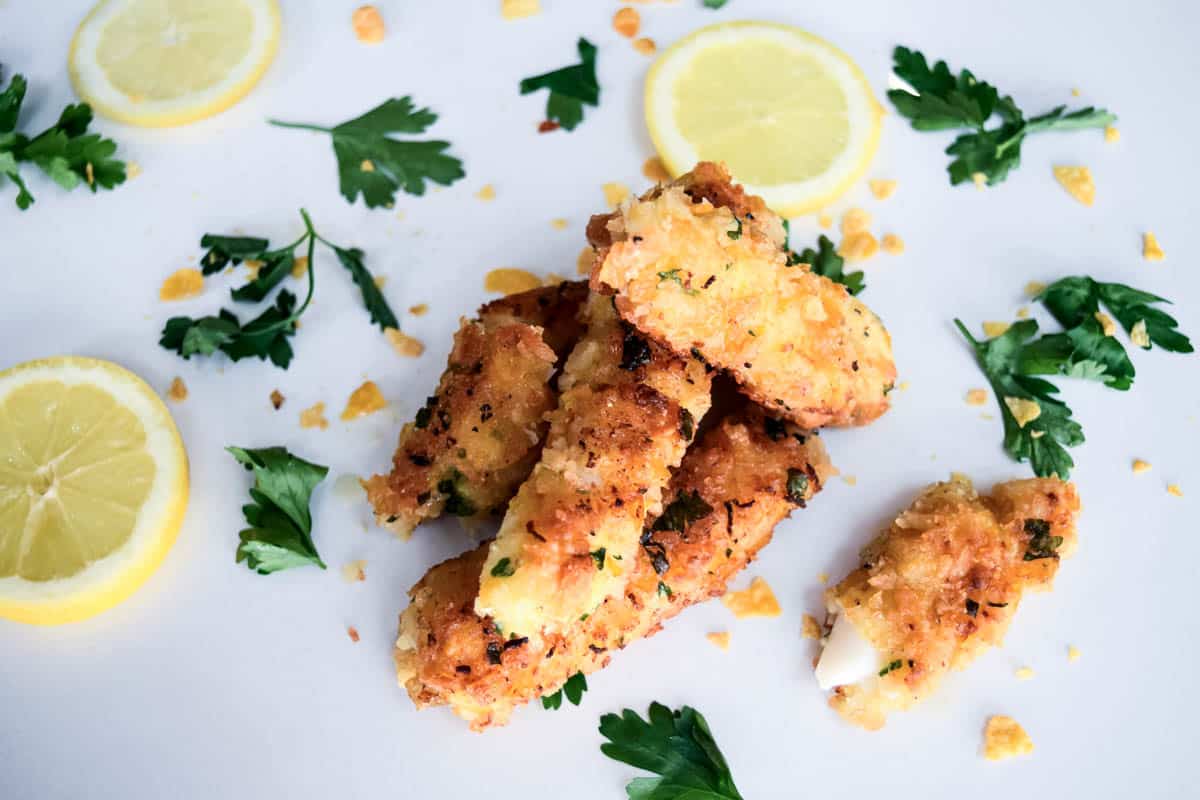
The crispy crunchy coating of these cornflake fish fingers makes them taste extra special and they’re even grown up enough for the adults to enjoy too. Making your own homemade fish fingers is surprisingly easy and you can freeze them too!
Recipe Overview
Skill Level:
BEGINNER
Prep Time:
25 MINUTES
Cook Time:
10 MINUTES

What Makes This Recipe Great
Surprisingly easy to make with a crispy coating. A good way to use up stale bread or excess Cornflake cereals too!
Freezer-friendly and perfect for prepping ahead when you need a quick meal.
Provides a better, more meaty texture than shop-bought varieties.
Fish fingers have become a regular on the menu for many kids around the world for generations. In America they are known as “Fish Sticks” and in Italy you will find them called “Bastoncini“.
Wherever you are based in the world, there is no denying that shop-bought fish fingers offer a quick and easy option for mid-week meals. And kids usually love them.
However, making your own homemade fish fingers is actually super easy and they can be enjoyed by both adults and children, making them a suitable option for the whole family. Using cod loin gives a better texture than the formed, minced fish you usually find in commercial varieties and you will know exactly what is going into your food too!
You can enjoy Cornflake fish fingers in lots of ways. As well as the most simple way of serving them with a squeeze of lemon juice and some tartar sauce or ketchup on the side, you can put them inside a sandwich or bread bun with tartare sauce, ketchup or, thousand-island dressing. Or, try making fish finger tacos and serve with a spicy Sriracha mayo.
Check Out More Fish Recipes:
Equipment Needed:
- Sharp Knife and Cutting Board: For slicing the cod loin into fingers.
- Large Mixing Bowl: Choose one large enough to fit the cod pieces in for marinating. You’ll also need clingfilm (plastic wrap) to cover the bowl.
- Food Processor: To create our cornflake-breadcrumb coating. If you don’t have a food processor, you can use ready-made breadcrumbs instead of bread slices and place them into a bag along with the other coating ingredients and crush with a rolling pin.
- Three Shallow Bowls: These are for our breading station.
- Large Frying Pan: To fry the cod fingers.
- Spatula or Tongs: To turn and remove the cod fish fingers from the frying oil.
- Kitchen Roll/Paper towels: To maintain their crispiness after frying it is a good idea to blot away any excess oil on the outside of each cornflake fish finger before serving.
Ingredients:
- Cod Loin: The fresher fish the better, it’s easiest to use skinless, boneless cod loin for this recipe so you don’t have to prepare it yourself.
- Lemon Juice: Allowing the cod to marinate for a short time in fresh lemon juice helps to tenderise it and gives the fish a subtle citrus flavour.
- Lemon Zest: Use a lemon that is unwaxed for the zest.
- Bread: To create the breadcrumbs, slightly stale bread works best. I have used white bread but you can also choose wholemeal bread if you prefer.
- Cornflakes: Mixed with breadcrumbs for extra crunch and texture in the coating.
- Fresh Parsley Leaves: Chopped and added to the coating for a burst of herby flavour. You can also use dried parsley, just reduce the amount by half as dried herbs are more concentrated in flavour.
- Sea Salt and Black Pepper: Adding a little seasoning to the coating.
- Plain Flour: Used as the first step in breading the fish, it helps the egg and crispy crumb coating to adhere. Use a plain, all-purpose flour.
- Egg: Acts as a binding agent to help the cornflake coating stick to the fish pieces.
- Oil: I use sunflower oil for frying the fish in this recipe.
Substitutions and Additions:
Wondering if you can substitute or add an ingredient? Here, I will tell you if that’s possible.
Substitutions:
- Cod Loin: Substitute with haddock, pollock, or tilapia for similar mild-flavoured white fish options.
- Lemon: You can use lime juice and lime zest instead, giving the fish fingers a slightly different flavour. .
- Bread: Use panko breadcrumbs or regular store-bought breadcrumbs instead.
- Cornflakes: Replace with crushed crackers or nachos for a slightly different texture.
- Fresh Parsley: Substitute with dried parsley or other herbs like dill or thyme.
- Sea Salt: Regular table salt can be used instead.
- Breadless Fish Fingers: If you want to create a fish fingers recipe without breadcrumbs, just replace the bread with more crushed cornflakes. The coating will have a slightly different texture (more crunchy) and you may want to try double coating the breadless fish fingers in the egg and coating to ensure they are completely covered. For this, you may need to use an additional egg.
Step-By-Step Guide – How To Make Cornflake Fish Fingers


Prep-Ahead Time Saving Tips for Cornflake Fish Fingers
Planning ahead makes this recipe even faster! Here are some ways to streamline your prep:
TOTAL TIME SAVED:
35 MINUTES
Marinate Early (Save 20 minutes): You can marinate the cod loin in lemon juice and store it in the fridge for up to 24 hours in an airtight container. This allows the fish to absorb flavour, and eliminate wait time on the day of cooking.
Prepare the Coating (Save 10 minutes): Prepare the cornflake breadcrumb mixture in advance. Blend the stale bread, cornflakes, lemon zest, parsley, salt, and pepper. Store the breadcrumb mixture in an airtight container or zip-lock bag in the pantry for up to 3 days.
Pre-cut the Fish (Save 5 minutes): Cut the cod loin into fish finger-sized pieces. Store in an airtight container in the fridge, or place in the freezer for longer. Defrost before coating.

Frequently Asked Question
Yes, you can bake them at 200°C (400°F) for about 15-20 minutes, flipping halfway through. Place them on a baking tray and drizzle with a little oil. However, baked fish fingers may not be as crispy as fried fish fingers.
Slightly stale bread is easier to process into crumbs and absorbs the oil better, resulting in a crisper coating.
Make sure the oil is hot before adding the fish fingers and do not overcrowd the pan. Fry them in batches if needed to ensure even cooking.
Mastering This Recipe – Expert Tips
- Dry the Fish: Before breading, pat the fish dry with kitchen roll/paper towels. This helps the flour and crumbs adhere better and prevents sogginess.
- Monitor Oil Temperature: Make sure the oil is hot (around 180°C/350°F) before adding the fish. Too cool, and the fish will absorb oil and become greasy; too hot, and the coating may burn before the fish is cooked through.
- Double-Coat for Extra Crispiness: For an even crunchier coating, you can double-coat the fish. After the initial coating in flour, egg, and cornflakes, repeat the last two steps in the process for a thicker crust.
- Stale Bread Makes Better Breadcrumbs: Alternatively, you can dry out fresh slices of bread in the oven before using them to make your breadcrumbs. Place the slices on a baking tray in the oven at 120°C (250°F) for about 15 minutes, turning over halfway. It may need a little longer, but be sure to take your bread out before it browns too much.
Storage
- Uncooked Fish Fingers: If you prefer to prepare the fish fingers ahead of time, you can store the breaded but uncooked fish fingers in the fridge for up to 24 hours before frying. Place them in a single layer on a baking sheet and cover with plastic wrap.
- Cooked Fish Fingers: Store cooked fish fingers in an airtight container in the fridge for up to 2 days.
Reheating
- Cooked Fish Fingers: Reheat cooked fish fingers in an oven or toaster oven at 180°C (350°F) for about 10 minutes or until heated through and crispy. Avoid microwaving, as it can make the coating soggy.
Freezing
- Uncooked Fish Fingers: You can freeze the breaded fish fingers before frying. Arrange them in a single layer on a baking sheet and freeze until solid, then transfer to a freezer bag or container. They can be frozen for up to 3 months. You can fry them straight from frozen but be sure they cook all the way through.
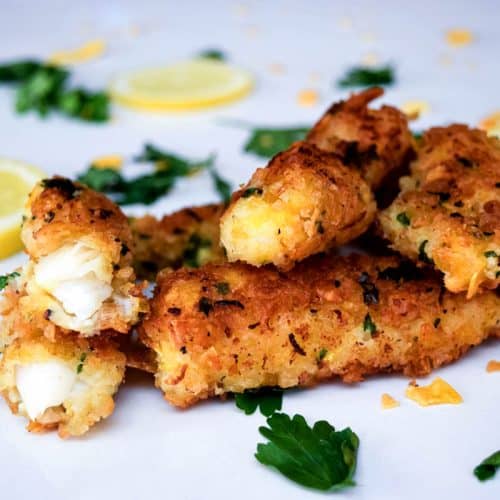
Easy Fried Cornflake Fish Fingers – With Cod Loin
Ingredients
- 400 g Skinless Boneless Cod Loin
- 3 tbsp Lemon Juice
- 1 tbsp Lemon Zest
- 3 Slices of Bread, Slightly Stale
- 50 g Cornflakes
- 1 tbsp Fresh Parsley Leaves, chopped
- 1 tsp Sea Salt
- 1 tsp Black Pepper
- 80 g Plain Flour
- 1 Egg
- Oil, for frying
Instructions
- Cut the cod loin into finger-length pieces, roughly the size of traditional fish fingers. Place the cod pieces into a bowl and pour the lemon juice over them. Cover the bowl with clingfilm and refrigerate for 20 minutes to marinate.
- While the fish marinates, prepare the coating. Tear the slightly stale bread into pieces and add them to a food processor. Add the cornflakes, lemon zest, chopped parsley, sea salt, and black pepper. Blend until the mixture forms fine crumbs.
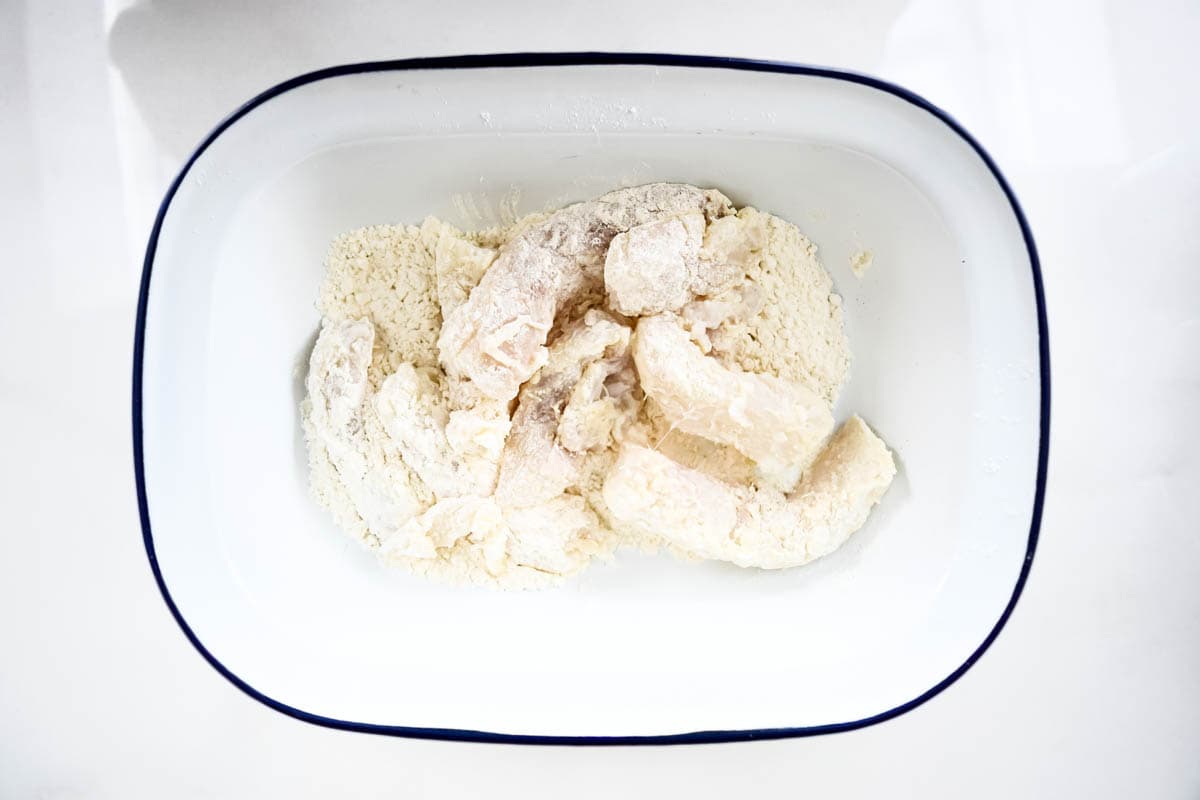
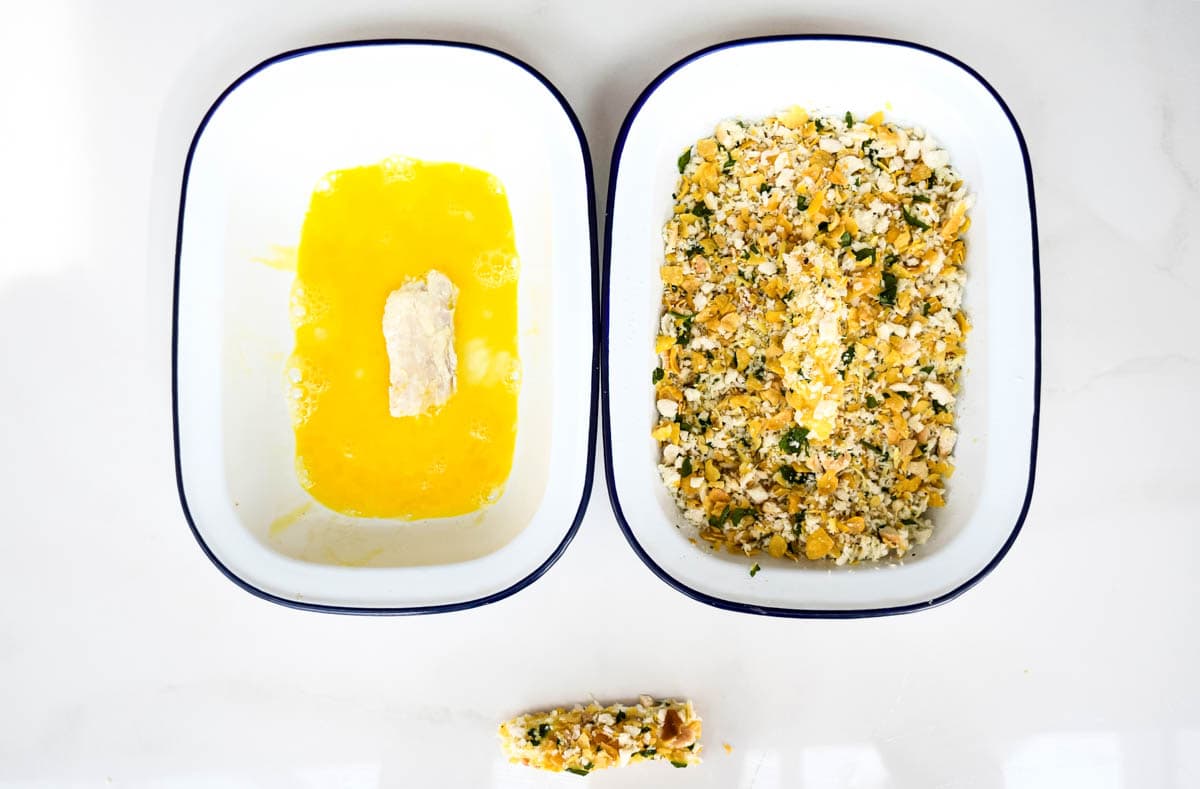
- Set up a breading station with three shallow bowls. Fill one bowl with plain flour (you can add a little seasoning or salt and pepper to the flour mixture if you like), beat the egg in the second bowl, and pour the cornflake mixture into the third bowl.
- Remove the cod pieces from the fridge. Working with one piece at a time, pat dry the fish with paper towels to remove any excess moisture. Coat each cod finger in flour, shaking off any excess. Then dip the floured fish into the beaten egg, allowing the excess to drip off. Finally, coat the fish in the cornflake mixture, pressing gently to ensure the crumbs stick evenly.
- Heat oil in a large frying pan over medium heat. The oil should be hot but not smoking.
- Once the oil is ready, add the cornflake-coated cod fingers to the pan in a single layer. Fry them for about 3-4 minutes on each side, or until they are golden brown and cooked through. You may need to fry them in batches to avoid overcrowding the pan.
- Once cooked, remove the fish fingers from the pan and place them on a plate lined with paper towels to drain any excess oil.
- Serve the fish fingers immediately with tartar sauce or your preferred dipping sauce.
Recipe Notes
- Key Points: Ensure you have an even coating of flour, egg, and cornflakes for a uniform crust. Add more egg if the coating isn’t sticking.
-
Substitutions:
- Cod: Use haddock, pollock, sea bream or bass.
- Cornflakes: Substitute with panko breadcrumbs or crushed Ritz crackers.
- Parsley: Try fresh dill.
-
Storage:
- Cooked Fish Fingers: Refrigerate for up to 2 days.
- Uncooked Fish Fingers: Refrigerate for up to 24 hours.
- Frozen: Uncooked, breaded fish fingers can be stored for up to 3 months.


Yummy. Never thought aout making my own fush fingers, looks good. Thanks.
Simon
Fish fingers were one of my favourites when growing up and every now and again I buy them for a bit of nostalgia. But these look so much tastier and a bit more grown up :)
Glad you like the look if them. You must give them a go! You could even make a batch and freeze before cooking so you can have these every time you feel nostalgic x